
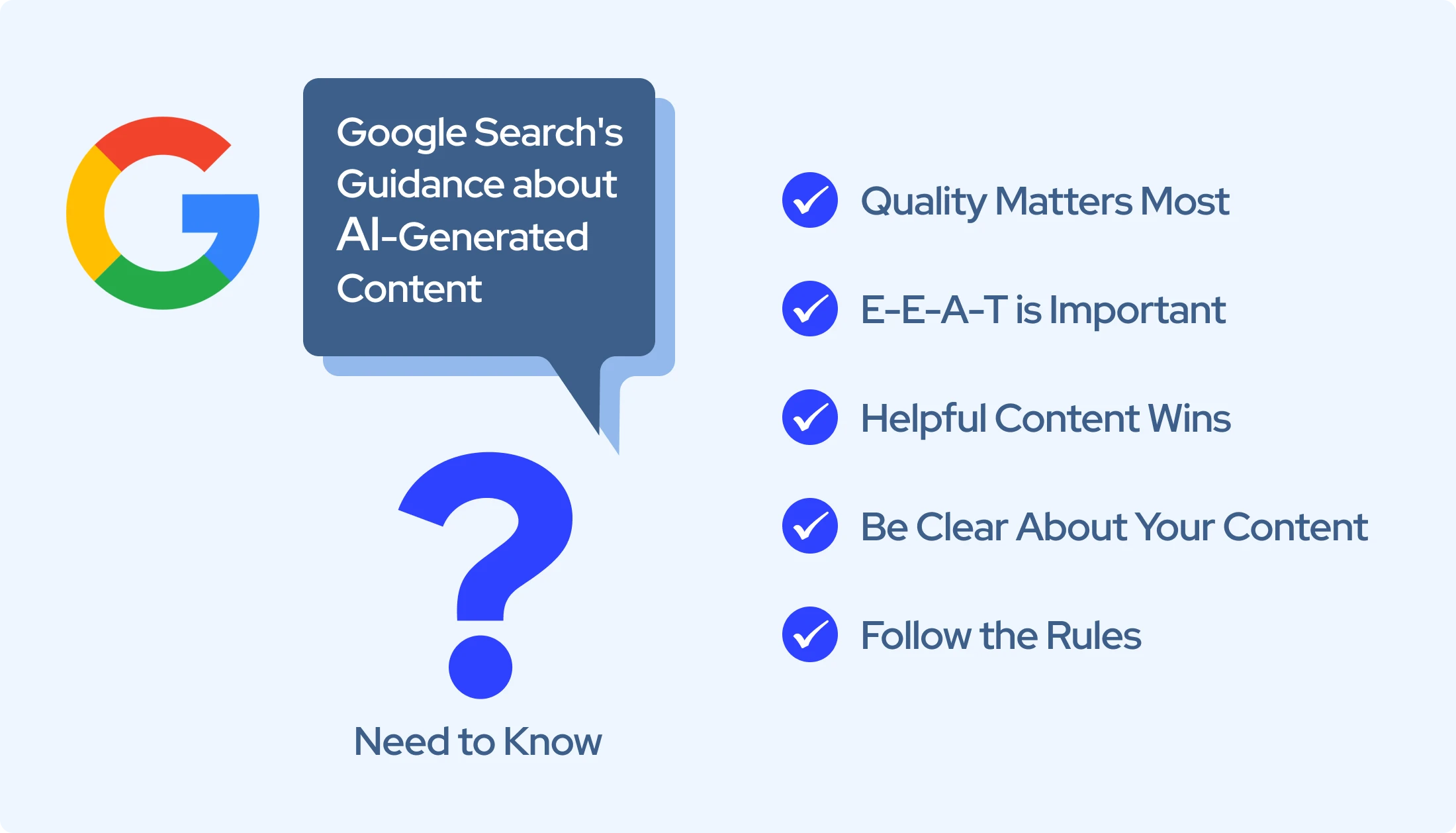
Google published explicit guidelines emphasizing that websites must rigorously fact-check AI-generated content before publishing. Alongside this guidance, Google launched its new AI-driven spam detector, SAFE (Search Automated Filtering Engine), and rolled out the September 2026 Spam Update globally. The push aims to penalize mass-produced, unverified LLM output and low-effort scraped content.
Google’s Fact-Checking Mandate
Google’s updated developer documentation clarifies that generative AI does not automatically retrieve and verify facts the way human researchers should. AI models predict plausible language based on training patterns, which means they frequently hallucinate details, misstate conditions, cite non-existent sources, and present outdated information as current.
The guidance explicitly requires publishers to manually fact-check AI-generated content for accuracy and trustworthiness before publication. This requirement extends beyond article body copy to include titles, meta descriptions, structured data, and image alt text—elements that appear directly in Google Search results.
For gambling, affiliate, and high-trust content verticals, this directive is particularly important. Incorrect statements about betting operators, casino bonuses, withdrawal timelines, payment methods, or license information can damage user trust, generate compliance issues, and trigger quality-action penalties.
The SAFE Spam Detection System
Google’s new anti-spam system, SAFE (Search Automated Filtering Engine), uses multi-agent analysis to identify coordinated synthetic abuse at network scale. Unlike older detection systems that examine individual pages in isolation, SAFE analyses content, behaviour, infrastructure, and entity relationships across entire publishing networks.
The system combines four specialized detection agents: a Root Agent that coordinates investigations and reaches final assessment, a Content Understanding Agent that identifies synthetic content artifacts and policy violations, a Behaviour Understanding Agent that flags inorganic activity and coordination signals, and a Channel Cluster Understanding Agent that maps relationships between domains, accounts, and content producers.
This network-level approach catches abuse patterns that single-page analysis misses. A spam operation using thousands of near-identical pages with slight keyword variations, synchronized publishing bursts, recycled author identities, or shared hosting infrastructure will now trigger coordinated-abuse detection instead of evading notice on an article-by-article basis.
The September 2026 Spam Update
Beginning September 24, 2026, at 9:15 a.m. PDT, Google rolled out its September spam update globally across all languages with an estimated two-week rollout window. It is the fourth confirmed spam update in 2026, following March, June, and August deployments.
Google did not specify a single targeted tactic, but the update applies to all categories of automated manipulation and abuse. Sites saw visibility losses or removal from search results based on spam-policy violations including mass-produced pages, AI-generated content lacking human review and verification, thin affiliate pages with generic claims, fake reviews and misleading structured data, doorway pages targeting overlapping keywords, and content designed primarily for search-ranking manipulation rather than user utility.
Recovery from spam-update penalties is not immediate. Google notes that sites may need months for its automated systems to recognize that they have changed publishing standards and comply with spam policies. Short-term “recovery hacks” do not work; sustainable recovery requires proving sustained improvement in content quality, accuracy, transparency, originality, and technical reliability.
What publishers must do now
Legitimate publishers should implement a verification-first editorial workflow: research every material claim from first-party sources before AI drafting begins, assign human fact-checkers to verify every statement that could influence user decisions or transactions, review all metadata (title, meta description, schema, alt text) for accuracy and consistency with visible page content, audit existing content for stale or inaccurate promotional claims, and consolidate overlapping pages that target similar intent without meaningful differentiation.
For affiliate sites in particular: verify all bonus amounts, terms, deposit requirements, withdrawal timelines, and game restrictions directly from operator source material; confirm all license and regulatory status from official regulator databases; remove or correct any schema that claims aggregate user ratings when editorial ratings only exist; test all payment methods and withdrawal processes to document accuracy; and maintain dated records of offer snapshots so changes can be properly documented and tracked.
The direction forward
Google’s combined push—updated fact-checking guidelines, the SAFE detection system, and the September spam update—signals that the search giant is enforcing a clear standard: automation is acceptable for content production, but human judgment and verification are mandatory for publication. Sites that continue publishing mass-produced, unverified AI output, scraped content, or thin affiliate pages without original research will face increasing penalties. Sites that invest in editorial verification, transparent methodology, and first-party testing will build resilience against spam updates and maintain visibility in an AI-driven search landscape.
Related Resources
Master GEO, explore citation tracking, learn 15 tools, optimize for AI, and build your toolkit.
Sources
- Google Search Central — Guidance on using generative AI content
- Search Engine Journal — Google has deployed a new AI spam detector called SAFE
- Search Engine Journal — Google rolls out September 2026 spam update globally
- Google Search Central — Google Search’s guidance about AI-generated content
- Google Search Central — Structured data policies and requirements


