
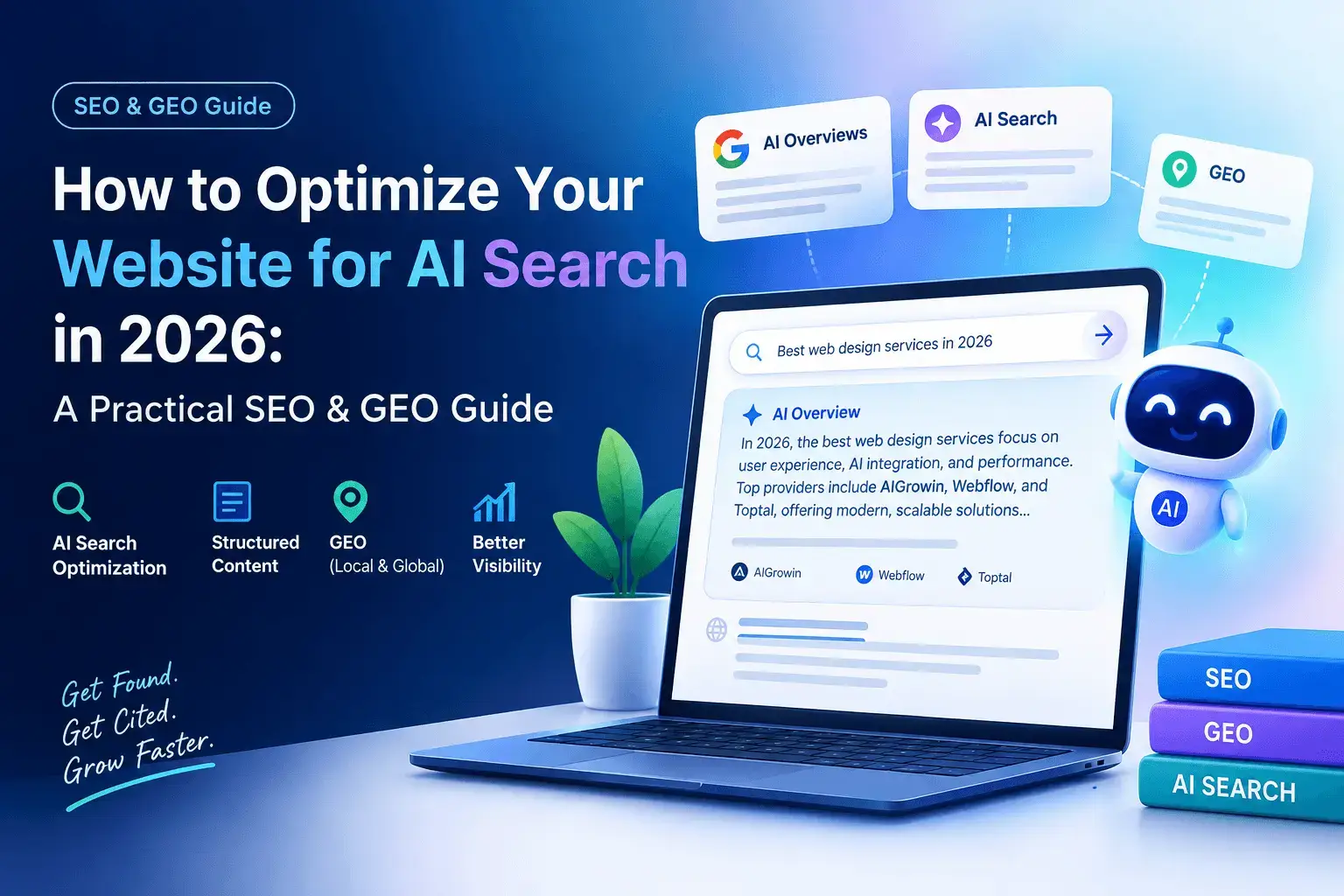
AI search engines do not cite websites simply because they use WordPress, publish many articles, or add an AI plugin. They tend to surface pages that are accessible, accurate, well structured, relevant to the user’s question, and supported by clear authority signals.
This checklist format gives WordPress website owners a practical framework for improving citation potential across ChatGPT, Perplexity, Claude, Gemini, and Google AI Overviews. Work through the technical, content, structured-data, and authority tasks below to make important pages easier for AI systems to discover, understand, and reference. Google’s guidance remains clear: AI search is built on strong core search fundamentals, including crawlability, useful content, and eligibility to appear in Search.
Key Takeaways
- AI search visibility starts with indexable, crawlable WordPress pages.
- A page needs a clear, direct answer—not just a target keyword.
- Important content should appear in the initial HTML response.
- Schema helps clarify page meaning but does not guarantee an AI citation.
- Original data, experience, and trusted mentions improve source credibility.
- FAQs, lists, tables, and concise paragraphs make content easier to retrieve.
- Measure AI visibility regularly instead of assuming your website is appearing.
The 10-Point Checklist
1. Is Your WordPress Website Crawlable?
The first step is ensuring that search engines and approved AI crawlers can access your site. A page cannot be cited if the crawler cannot fetch it, process it, or understand that it is available for indexing.
Check your WordPress settings, robots.txt file, XML sitemap, noindex tags, canonical URLs, CDN configuration, security plugin rules, and server firewall. Important articles and landing pages should return a valid HTTP 200 response, use HTTPS, and avoid accidental restrictions.
Quick Technical Checks
- Confirm that Settings → Reading does not discourage search engines from indexing the site.
- Check that important pages do not have
noindextags. - Submit and maintain a clean XML sitemap.
- Fix 404 errors, redirect loops, broken canonicals, and duplicate pages.
- Review
robots.txtrules before blocking or allowing individual crawlers. - Make sure content does not require login access or location-specific interaction to load.
WordPress.com’s AI search guidance also recommends enabling indexing, configuring crawler access responsibly, and maintaining a discoverable XML sitemap.
2. Does Every Key Page Answer a Question Early?
AI systems are designed to respond to user prompts. Your content should therefore answer the main question quickly, ideally in the opening paragraph and directly below relevant headings.
For example, an article titled “How to Optimise a WordPress Website for AI Search” should not spend five paragraphs discussing the history of artificial intelligence. It should immediately explain the practical answer: improve crawlability, publish answer-first content, use clear structure, demonstrate expertise, and keep important information updated.
Use the Answer-First Formula
Use this structure under major headings:
- State the answer in one or two clear sentences.
- Explain why the answer matters.
- Add implementation steps, examples, evidence, or cautions.
- Link to supporting internal resources where relevant.
This format creates stand-alone content sections that are easier for both readers and AI tools to interpret. WordPress guidance specifically recommends starting sections with the main point and using scannable formatting so systems can identify and extract useful answers.
3. Is Important Information Visible in HTML?
Your WordPress page should contain its most valuable information in the initial HTML output. Headings, introductory answers, product or service details, author biographies, prices, comparison tables, and FAQs should not rely entirely on JavaScript to appear.
Some crawlers have limited or inconsistent rendering of heavy client-side scripts. If your content is hidden in a dynamic tab, animation, pop-up, page-builder widget, or JavaScript-driven interface, the crawler may not see it reliably.
What to Test
Open an important page and inspect the page source rather than only viewing it in the browser. Search for key sentences, headings, FAQ answers, author details, and primary calls to action.
If the content does not appear in the source, use server-side rendering, simplify the component, or include a visible HTML version of the information. Strong semantic HTML—such as descriptive headings, lists, tables, and internal links—also makes the page easier to understand.
4. Are Your Headings Written for Real Search Questions?
Headings should describe the exact information that follows. Generic labels such as “More Information,” “Our Approach,” or “Things to Consider” are weak because they do not provide enough context for readers or retrieval systems.
Write headings around practical search intent. Use question phrases where they naturally fit, including “How to,” “What is,” “Why,” “When,” “Can,” “Best,” and “Does.”
Better Heading Examples
| Weak Heading | Strong Heading |
|---|---|
| Getting Started | How to Check if WordPress Pages Are Crawlable |
| Our Strategy | What Makes Content Citable by AI Search Engines? |
| More Details | Why Does Schema Markup Matter for WordPress SEO? |
| Final Thoughts | How to Measure AI Search Citation Visibility |
Clear H2 and H3 headings improve readability, support keyword relevance, and help every page section communicate a distinct purpose.
5. Do You Use Lists, Tables, and FAQs?
AI-generated answers often need concise, well-organised information. Lists, comparison tables, definitions, checklists, and FAQs make it easier to locate the right passage for the user’s question.
This does not mean every article should be filled with bullet points. Use structured formats only when they improve clarity. A comparison should use a table. A tutorial should use numbered steps. A group of related quick facts should use bullets. A common user objection should be addressed in a FAQ.
Best Content Formats for AI Retrieval
- Definitions for industry terms and specialist topics.
- Numbered tutorials for processes and implementation.
- Tables for products, pricing, platforms, features, or alternatives.
- Checklists for audits and ongoing maintenance.
- FAQ sections for direct question-and-answer content.
- Short examples that demonstrate how the advice applies in practice.
- Original research and evidence that provides information unavailable elsewhere.
Keep paragraphs concise. Two to three sentences per paragraph often improves readability and makes individual ideas easier to identify.
6. Is Your Schema Accurate and Useful?
Schema markup is structured data that provides machine-readable context about the content of a page. It can identify a page as an article, FAQ, business, service, product, review, person, or organisation.
Use schema to describe your visible content accurately. Google explains that structured data helps its systems understand page content and the entities discussed on the web.
However, schema should not be treated as a guaranteed AI citation tool. There is no special AI-only schema markup that unlocks placement in generative results. Standard schema remains valuable for general search understanding and rich-result eligibility, but it must match the information visible on the page.
Recommended WordPress Schema Types
| Page Type | Relevant Schema |
|---|---|
| Blog article | Article or BlogPosting |
| FAQ section | FAQPage |
| Business homepage | Organization or LocalBusiness |
| Author page | Person |
| Service page | Service |
| Product page | Product |
| Website navigation | BreadcrumbList |
Use one main SEO or schema plugin where possible. Multiple plugins can create duplicated or conflicting markup, which can make your site harder to interpret.
7. Does Your Content Show Real Expertise?
AI systems are more likely to surface content that appears reliable and genuinely useful. Pages built from generic statements, copied ideas, or unverified AI output are less valuable than pages that include first-hand experience, clear methodology, unique analysis, or evidence.
Strengthen each high-value page with author information, a published or updated date, sources where claims require support, practical examples, screenshots, original data, and a clear explanation of how recommendations were reached.
Build Trust Through Transparency
Create an About page, author pages, editorial guidelines, privacy policy, contact information, and terms pages. If you publish reviews, comparisons, affiliate recommendations, financial information, betting content, health content, or legal content, explain how information is evaluated and disclose commercial relationships clearly.
High-quality, verifiable, and well-structured content is a common theme among websites that gain visibility across AI search tools.
8. Are You Building Topic Clusters?
One excellent article is useful, but a connected library of content can send stronger topical signals. Build clusters around the subjects that matter most to your audience and business.
For example, an AI search cluster could include one pillar page about Generative Engine Optimisation, then supporting articles about AI crawler access, WordPress schema, AI citation tracking, content formatting, AI marketing tools, and SEO measurement.
Use Internal Links Strategically
Link related articles together with descriptive anchor text. Do not use vague links such as “click here” or “read more” when a clear description is possible.
A good internal link tells readers and crawlers what they will find next. For example: “Use this guide to measure AI visibility across priority prompts and competitors.” This supports navigation, strengthens topic relationships, and gives readers a logical next step.
9. Have You Earned External Authority Signals?
Authority is not only about the number of backlinks a website has. It also includes trusted brand mentions, relevant editorial references, author credibility, independent reviews, recognised partnerships, original research, and consistency across professional profiles.
Create resources other publishers want to reference. This could include survey data, original benchmarks, useful templates, detailed case studies, expert commentary, industry statistics, product testing, or practical calculators.
Focus on Quality, Not Manipulation
Avoid spammy link building, paid placements that are not disclosed, fake reviews, fabricated statistics, and low-value guest posts created only for backlinks. These practices can undermine trust and damage the long-term value of your site.
Instead, focus on genuinely useful assets and relationships in your field. When credible websites refer to your content naturally, they help users and AI systems understand that your brand is a relevant source.
10. Are You Tracking AI Visibility Monthly?
AI visibility is not a one-time optimisation project. Citation behaviour can change based on the query, the model, the user’s location, source freshness, competitor content, and platform updates.
Build a monitoring process. Select 20 to 50 priority prompts that represent your most valuable informational, commercial, comparison, local, and branded searches. Test them regularly in major AI platforms where available.
AI Visibility Tracking Template
| What to Record | Why It Matters |
|---|---|
| User prompt | Shows the exact search intent being tested |
| AI platform | Citation results differ by tool |
| Citation status | Tracks whether your domain was referenced |
| Cited page URL | Identifies pages that earn visibility |
| Competitor sources | Reveals content and authority gaps |
| Answer accuracy | Checks whether your brand is represented correctly |
| Referral traffic | Connects visibility with website performance |
| Update actions | Creates a measurable optimisation record |
Use GA4, Google Search Console, server logs, and manual testing together. Monitor AI referrals, organic performance, branded queries, crawl errors, conversions, links, and content engagement rather than relying on one metric alone.
Related Posts
- Semrush vs Ahrefs for AI Search
- How to Measure AI Visibility
- Best AI Tools for 2026
- GEO and AI Search Optimisation
- AI Marketing Trends
FAQ
How do I make WordPress content easier for AI search engines to cite?
Publish crawlable pages with direct answers, logical headings, readable HTML, accurate information, appropriate internal links, and clear author or business details.
Does WordPress automatically optimise a website for AI search?
No. WordPress provides a strong foundation, but AI visibility still depends on your theme, hosting, plugins, page structure, crawlability, content quality, schema, and authority.
Should I use an llms.txt file?
An llms.txt file is an emerging convention that may help provide a simplified guide to key pages. It can be part of a wider strategy, but it does not replace crawlable content, technical SEO, proper internal linking, or original information.
Can an AI search engine cite a page that does not rank first on Google?
Yes. AI tools may select sources based on the specific query and the usefulness of an individual passage. Strong page structure, direct answers, relevance, and source credibility can matter even when a page is not in the first traditional organic position.
Is FAQ schema required for AI citations?
No. FAQ schema can help describe visible FAQ content, but it does not guarantee citations. Use it only when a page contains real questions and answers that users can see.
How can I check whether AI crawlers are visiting my website?
Review server logs, hosting dashboards, CDN logs, and analytics tools that record bot activity. Check crawler user-agent documentation before drawing conclusions or changing site access rules.
What is the most important action for AI search visibility?
Start by ensuring that important WordPress pages are accessible, indexed, fast, and written to answer a specific search question clearly. Everything else becomes less effective if the page cannot be crawled or does not provide a useful answer.
Conclusion
AI search citations are earned through clarity, accessibility, usefulness, and trust. The strongest WordPress strategy is not to chase an unknown algorithm; it is to make your best information easy to discover, easy to interpret, factually sound, and genuinely valuable to readers.
Use this checklist as a recurring audit. Fix technical barriers, improve high-intent pages, organise content around user questions, validate structured data, build topic authority, and track whether visibility turns into qualified traffic and conversions. These actions support both traditional SEO and the growing search ecosystem shaped by AI-generated answers.
Important Information
This article is provided for general education and informational purposes. Search engine algorithms, AI platform features, crawler policies, citation systems, WordPress plugins, structured-data requirements, and indexing behaviour can change at any time. No citation, ranking, traffic, conversion, or commercial result is guaranteed. Test technical changes in a staging environment, validate schema markup, review official platform documentation, and seek qualified technical, legal, or compliance advice where appropriate.


